
From Workshop to Shipment: Nitrogen Protection for Shell and Tube Heat Exchangers Delivered to Serbia
For a shell and tube heat exchanger, performance is not only determined by design and fabrication. In many cases, what happens after manufacturing and before installation can have just as much impact on long-term reliability.
As a professional heat exchanger manufacturer, HC recently completed the fabrication of two shell-and-tube heat exchangers for a project in Serbia. With the main manufacturing and inspection processes finished, the equipment has now entered the final stage before shipment.
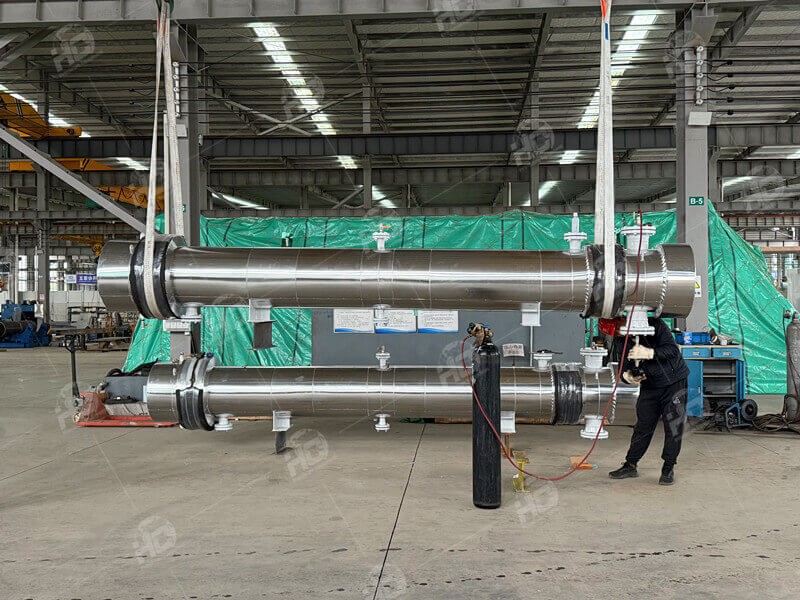
Instead of rushing to delivery, our team focused on a step that is often overlooked but critically important—nitrogen charging for internal protection.
During fabrication, a shell and tube heat exchanger typically undergoes hydrostatic testing and internal cleaning. Even after draining, residual moisture can remain inside the shell side and tube bundle. If the equipment is left exposed to air, especially in humid environments or during long-distance transportation, this combination of moisture and oxygen can gradually initiate internal corrosion.
This risk becomes more pronounced in international projects. From factory dispatch to final installation, the equipment may go through ocean shipping, port storage, inland transportation, and on-site staging. The entire process can take weeks or even months. Without proper internal protection, oxidation can begin long before the equipment is put into operation.
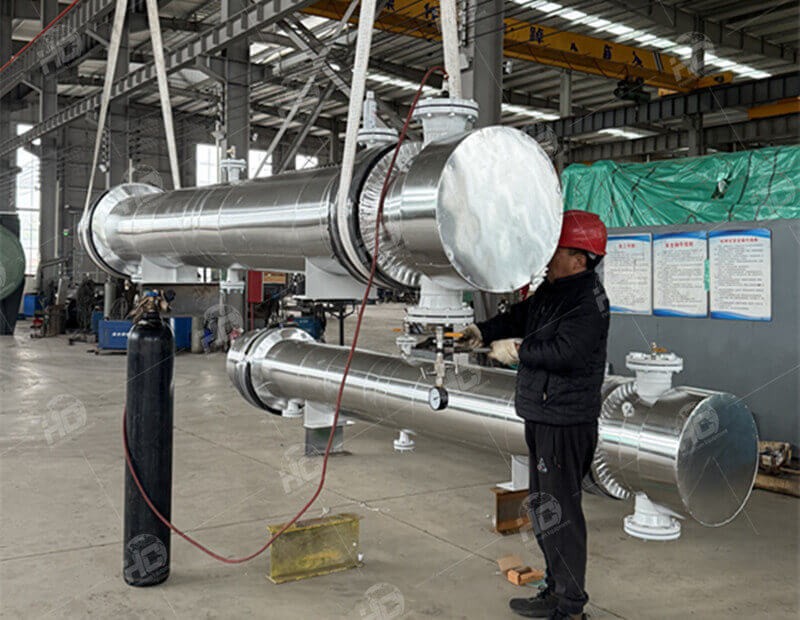
To address this, HC applies nitrogen charging before shipment. By filling the exchanger with dry, inert nitrogen, the internal environment is effectively isolated from oxygen and humidity. This helps prevent corrosion during transit and storage, ensuring that the shell and tube heat exchanger arrives on site in optimal condition.
The two units for the Serbia project were designed and manufactured in accordance with ASME Boiler and Pressure Vessel Code Section VIII Division 1 and carry U Stamp certification. Following pressure testing and final inspection, nitrogen sealing was carried out as part of the delivery preparation.
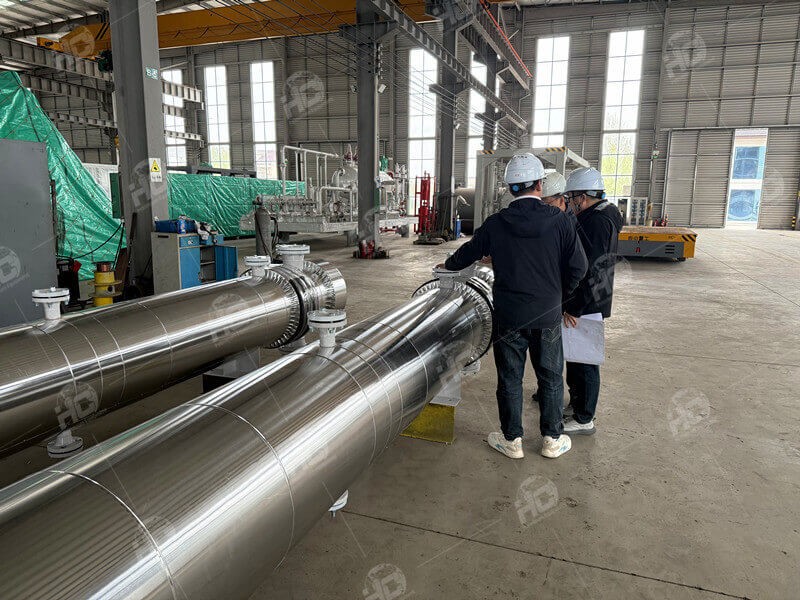
From an engineering perspective, details like this often make the difference. A reliable heat exchanger manufacturer does not only focus on materials, welding, or design, but also on how the equipment is protected before it reaches the customer.
At HC, delivery is not the end of manufacturing—it is the beginning of performance in real operating conditions.