
Why Do Crude Oil Transfer Pumps Become a Bottleneck in Oilfield Operations?
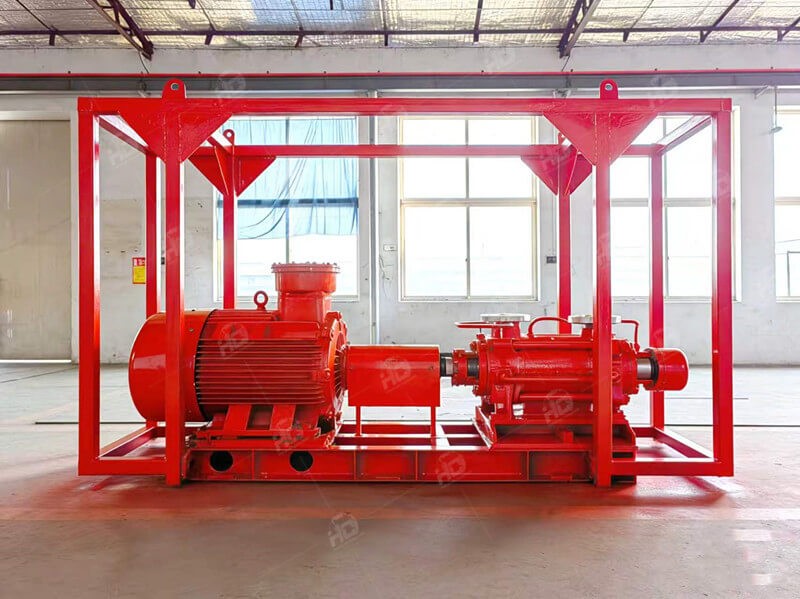
Recently, HC completed the manufacturing of a skid-mounted crude oil transfer pump package for an oilfield project in Nigeria. The unit has successfully passed factory inspection and is now prepared for delivery to the project site.
At first glance, a crude oil transfer pump may seem like just another piece of rotating equipment within the production system. However, for many oilfield operators, the performance of the transfer pump can directly influence production continuity, operating costs, and overall field efficiency.
During discussions with the client, one requirement was repeatedly emphasized: reliability.
The pump was expected not only to meet the current production requirements but also to maintain stable performance under continuous operation in a demanding oilfield environment. This concern is not unique to this project. In fact, it reflects a common challenge faced by oil producers around the world.
Many crude oil transportation systems begin operation without major issues. However, after months or years of service, operators often encounter declining flow rates, increased maintenance frequency, excessive vibration, or unexpected shutdowns. While these problems may appear unrelated, they frequently originate from the same source — a pumping system that was not fully optimized for actual field conditions.
Unlike water transfer applications, crude oil presents additional challenges. Fluid properties can vary significantly depending on the reservoir, production stage, and operating temperature. Higher viscosity, entrained gas, and occasional solid particles can all place additional demands on pumping equipment.
As production conditions change over time, pumps that were originally selected with minimal design margins may gradually struggle to maintain performance. The result is reduced operational efficiency, higher maintenance costs, and increased downtime.
For remote oilfields, these issues become even more critical. A single pump failure can affect storage tank management, downstream processing units, and production schedules across the entire facility.
To address these concerns, the Nigeria project adopted a skid-mounted design integrating the pump, motor, coupling system, and supporting structure into a compact package.
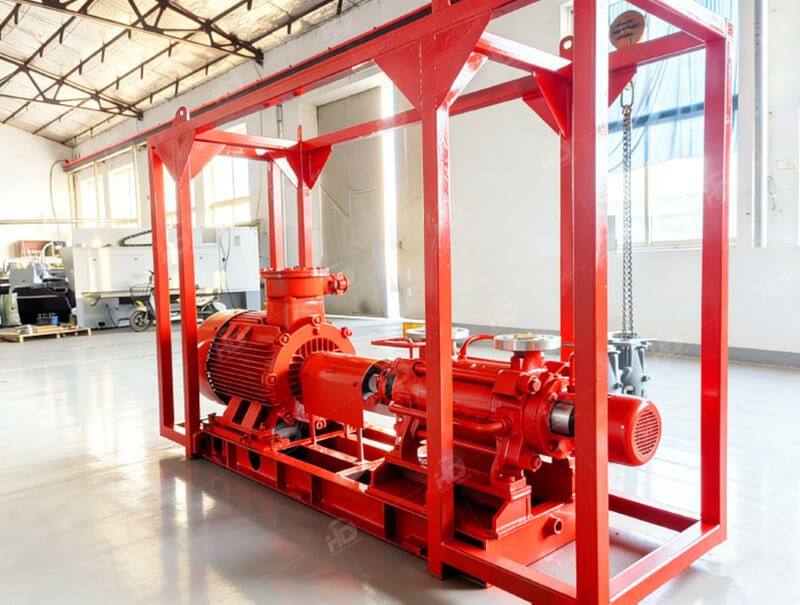
This configuration offers several practical advantages. Factory assembly and testing reduce on-site installation requirements and shorten project commissioning time. The integrated structure improves alignment stability and simplifies transportation, lifting, and maintenance activities. For operators working in remote locations where technical support and spare parts may not be immediately available, these benefits can significantly reduce operational risks.
More importantly, the system was designed with long-term reliability in mind rather than focusing solely on initial procurement costs.
This reflects an important shift occurring across the oil and gas industry. Today, operators are increasingly evaluating equipment based on lifecycle performance rather than purchase price alone. The true cost of a pumping system is not determined by the equipment itself, but by how reliably it performs throughout years of operation.
In many cases, the most valuable equipment in a production facility is not the largest separator or the most sophisticated control system. It is the equipment that quietly performs its task every day without interruption.
Crude oil transfer pumps fall squarely into that category.
As oilfields continue to pursue higher efficiency and lower operating costs, selecting the right pumping solution remains one of the most important factors in maintaining safe, stable, and profitable production.