
5 Things You Should Know About a Well Test Separator
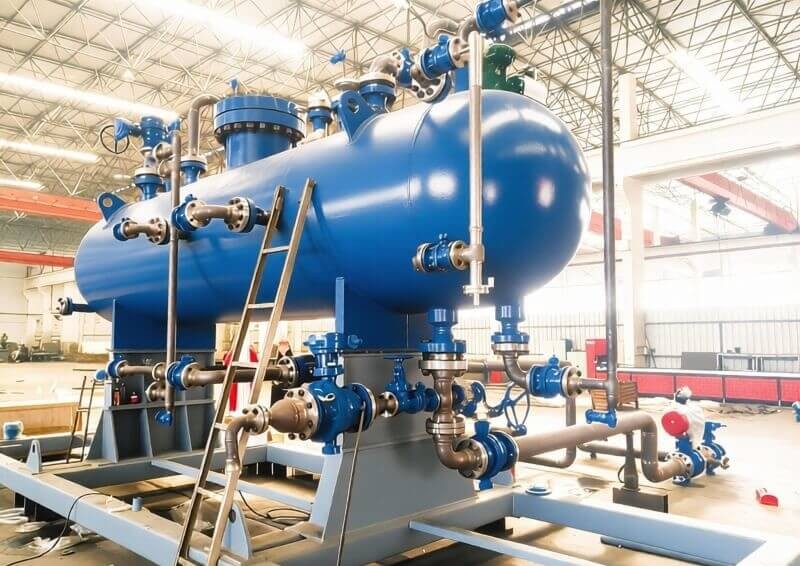
At an oilfield wellsite, a well test separator may look like a large pressure vessel mounted on a steel skid. But its role goes beyond separating fluids. It helps operators understand how an individual well is producing and provides important data for production evaluation.
Here are five things worth knowing about a well test separator and its role in surface well testing operations.
1.It Separates the Wellstream Into Different Phases
Fluids coming from a well can contain a mixture of oil, gas, and water. Their proportions vary depending on the well and its production conditions.
A three-phase well test separator is designed to separate these fluids into individual streams. Gas exits through the gas outlet, while oil and water are separated into their respective liquid streams.
This allows each phase to be measured and sampled as required during well testing.
The resulting data helps operators understand the production characteristics of an individual well rather than relying only on the combined output of a field.
2.Pressure and Gravity Both Play a Role in Separation
A well test separator does not rely on a single physical principle.
As the incoming wellstream enters the vessel, changes in flow velocity and momentum help initiate separation. Gas disengages from the liquid, while gravity allows liquid droplets and different liquid phases to separate according to their physical properties.
Depending on the process requirements, internal components such as inlet devices, baffles and mist extractors can further improve separation performance.
Operating pressure and temperature also affect the behavior of the fluids, including the amount of gas that remains dissolved in the liquid.
The actual separation process therefore depends on the fluid properties, operating conditions and separator design.
3.Not Every Well Test Separator Has the Same Internal Configuration
Although horizontal three-phase separators are widely used in surface well testing, their internal arrangements can vary.
Common functional areas include the inlet separation section, the gravity separation section, the gas mist extraction section and the liquid collection compartments.
Each serves a different purpose. The inlet device helps manage the incoming flow, the separation section provides time and space for the phases to disengage, and the mist extractor reduces liquid carryover into the gas outlet.
For three-phase service, the vessel must also maintain suitable separation between the oil and water layers.
The final configuration depends on the required capacity, fluid characteristics and separation duty. A separator should be designed for its intended operating conditions rather than selected by vessel dimensions alone.
4.It Turns Well Testing Into Measurable Production Data
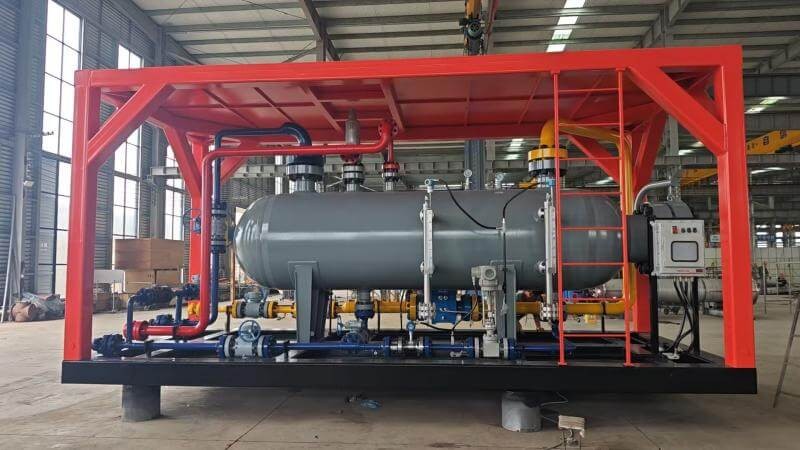
Separating oil, gas and water is only part of the job. A well test separator is also used with suitable metering instruments to measure the flow rates of the separated phases.
These measurements help operators evaluate individual well performance, compare production results over time and support production allocation.
However, the separator itself does not automatically guarantee accurate measurements. Meter selection, calibration, operating stability, fluid properties and operating procedures all influence the quality of the recorded data.
Reliable well test results depend on both suitable separation equipment and a properly configured measurement system.
5.Changes in Water Production Can Reveal Important Production Trends
Water production is an important parameter to monitor during well testing.
An increase in produced water or water cut may indicate a change in well performance or reservoir conditions. It can also be associated with changes in operating conditions or other factors affecting production.
By measuring oil, gas and water separately, a three-phase well test separator helps operators identify changes that might otherwise be hidden in a combined production stream.
These measurements are useful indicators, but they do not establish the cause of a change on their own. Operators need to compare the results with historical well tests, pressure data and other available production information.
Why a Well Test Separator Matters
A well test separator is more than a vessel that separates oil, gas and water. It is an important part of a surface well testing system, supporting phase separation, production measurement and well performance evaluation.
When properly selected and operated, it helps operators obtain more useful information from individual wells and make better-informed production decisions.
For oilfield projects, selecting a suitable well test separator requires consideration of the expected flow rates, operating pressure and temperature, fluid properties, required measurement accuracy and overall surface testing system configuration.
HC Petroleum supplies surface well testing equipment for oil and gas applications, including well test separators designed to meet project-specific operating requirements.
For equipment inquiries, contact sales@hcpetroleum.hk.