
Why Is the Production Separator Pressure Rising When Inlet Flow Remains Stable?
Assume a production separator normally operates at 25 barg.
The equipment has been running steadily, but one day, operators notice that the separator pressure starts to rise continuously and gradually approaches the high-pressure alarm setpoint.
Meanwhile, the inlet flow rate remains relatively unchanged.
The first thing to consider might be whether the inlet flow has suddenly increased. However, if the inlet flow is stable, other possible causes need to be investigated.
An increase in separator pressure does not necessarily mean that more fluid is entering the vessel. Restricted gas outlet flow, increased downstream backpressure, and problems with the pressure control system can all contribute to this condition.
From a field troubleshooting perspective, there are six key areas worth checking.
1.Check Whether the Pressure Control Valve Is Operating Properly
The pressure control valve plays an important role in maintaining the operating pressure inside a production separator.
Under normal conditions, the pressure control system adjusts the gas outlet valve opening in response to changes in vessel pressure, keeping the separator pressure close to its setpoint.
If the control valve becomes stuck, cannot open sufficiently, or experiences problems with its positioner or instrument air supply, gas discharge may become restricted, causing the separator pressure to increase.
During field inspection, operators should check whether the controller output signal corresponds to the actual valve position. The positioner, instrument air pressure, and overall valve movement should also be examined.
2.Check for Increased Downstream Backpressure
Gas discharge from a separator is affected not only by the pressure control valve but also by the pressure conditions in the downstream system.
For example, increased pressure in the gas gathering pipeline or changes in compressor suction conditions may result in higher downstream backpressure.
When the pressure difference between the separator and the downstream system decreases, the available pressure differential for gas flow becomes smaller, potentially reducing the gas discharge capacity.
Therefore, troubleshooting should not be limited to the separator itself. Operators should also check downstream gas pipeline pressure, gathering system conditions, and relevant compressor operating parameters.
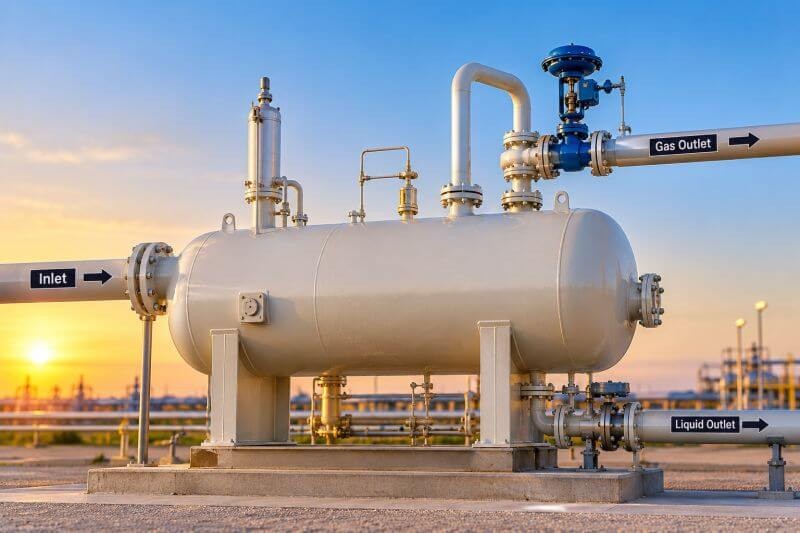
3.Check for Restrictions or Blockages in the Gas Outlet Line
A partially or completely blocked gas outlet line can also cause separator pressure to rise.
Common inspection points include:
Whether the outlet isolation valves are in their correct operating positions.
Whether hydrates or other solid deposits have accumulated inside the pipeline.
Whether downstream filters or other equipment are blocked.
Whether liquid has accumulated at low points in the gas outlet line.
Any of these conditions may increase gas flow resistance and affect normal gas discharge.
Operators can use valve position checks, pressure differences across the pipeline, and operating records to help identify potential restrictions. Any confirmed blockage should be addressed in accordance with approved site operating procedures.
4.Rule Out a Pressure Transmitter Malfunction
Another possibility is that the actual separator pressure has not increased, but the instrument is providing an incorrect reading.
For example, zero-point drift in the pressure transmitter, abnormal signal output, or faults in the instrument loop may cause the displayed pressure to differ from the actual vessel pressure.
When an abnormal pressure trend is observed, operators should verify the reading using an independent pressure gauge, a backup measurement point, or available instrument diagnostic information.
Before investigating process-related problems, it is important to establish whether the pressure increase is real.
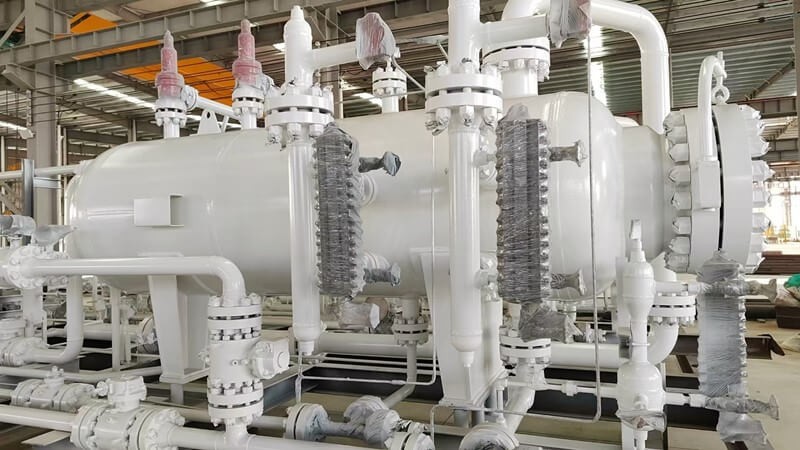
5.Review Inlet Fluid Composition and Production Conditions
A relatively stable total inlet flow rate does not necessarily mean that the gas flow rate entering the separator has remained unchanged.
For example, changes in the gas-to-liquid ratio (GLR) during well production may increase the actual gas load even when the total inlet flow remains relatively stable.
Other factors, such as well switching, changes in individual well production conditions, and variations in upstream pressure, may also affect the gas load entering the separator.
Therefore, operators should look beyond the total inlet flow reading and review actual gas flow rate, upstream pressure, gas-to-liquid ratio, and recent production changes.
6.Check Liquid Level and Foaming Conditions
Abnormal liquid levels and excessive foaming can also affect the gas-liquid separation process.
When the liquid level becomes too high, the available gas separation space inside the vessel may be reduced. Severe foaming can also interfere with the normal separation of gas and liquid.
In some cases, liquid carryover may further affect downstream gas handling equipment.
During inspection, operators should review liquid level trends, check the operation of the level control valve, and look for signs of foaming or liquid carryover.
Pay Attention to the Separator's Pressure Protection System
When investigating abnormal separator pressure, it is also important to understand the different functions of the pressure control and protection systems.
The pressure control system maintains the normal operating pressure of the separator. A high-pressure alarm alerts operators to abnormal operating conditions. A high-high pressure trip or shutdown function initiates protective actions when its configured setpoint is reached.
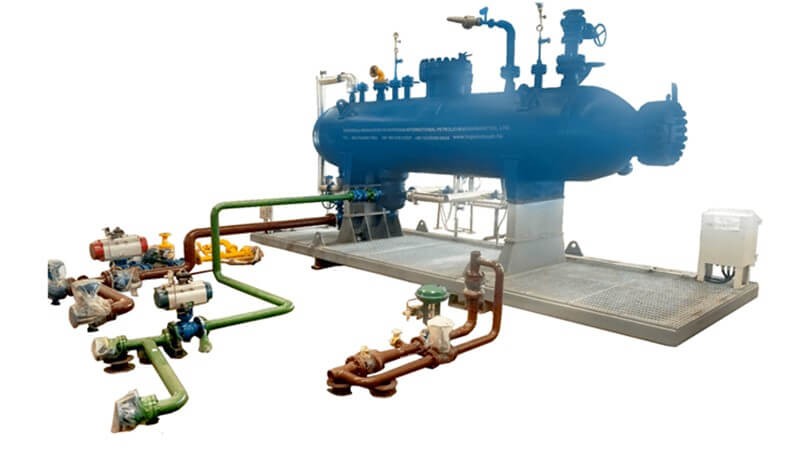
The pressure safety valve (PSV), meanwhile, provides pressure relief under applicable overpressure conditions.
These devices serve different purposes and cannot replace one another.
If separator pressure continues to rise, operators should respond in accordance with approved site operating procedures, verify the relevant alarm and trip setpoints, and coordinate with the operations team.
Protective setpoints should never be adjusted arbitrarily, and safety protection functions should not be bypassed simply to maintain production.
A continuous increase in production separator pressure may appear to be a simple pressure-related issue, but the underlying cause can involve several parts of the process system, including inlet conditions, gas outlet restrictions, downstream pipeline pressure, control valves, and instrumentation.
For field engineers, the key is not to immediately assume that excessive inlet flow is responsible whenever separator pressure increases.
Instead, the investigation should focus on understanding what has changed in the balance between gas entering and gas leaving the separator.
When gas enters the vessel faster than it can be discharged, separator pressure may continue to rise. Identifying what has disrupted this balance is the key to effective troubleshooting.