
Sand Trap vs Desander: What Is the Difference and How to Choose the Right One?
Sand production is a common challenge in oil and gas operations, especially during well testing and early production stages. When sand and solid particles flow together with oil, gas, or water, they can cause serious problems such as erosion of valves, damage to downstream equipment, and unexpected production interruptions.
To reduce these risks, operators usually install sand removal equipment before the fluid enters critical processing equipment. Among the commonly used solutions, Sand Trap and Desander are two types of equipment that are often mentioned together.
Although both are designed to remove sand from produced fluids, they work in different ways and are suitable for different operating conditions. Understanding the difference between them is important for selecting the right equipment for a specific oilfield application.
What Is a Sand Trap?
A Sand Trap is a vessel designed to remove larger sand particles and solid debris from the production stream through gravity separation.
When the fluid enters the Sand Trap, the flow velocity decreases, allowing heavier particles to settle at the bottom of the vessel. The accumulated sand can then be removed through the drain system.
Because of its simple design and large sand holding capacity, Sand Trap is commonly used in applications where a largeamount of solid particles may be produced, such as:
Well cleanup operations
Wells with high sand production
Simple structure and easy operation
Large capacity for collecting solids
However, because it mainly relies on gravity separation, its efficiency in removing very fine sand particles is limited.
What Is a Desander?
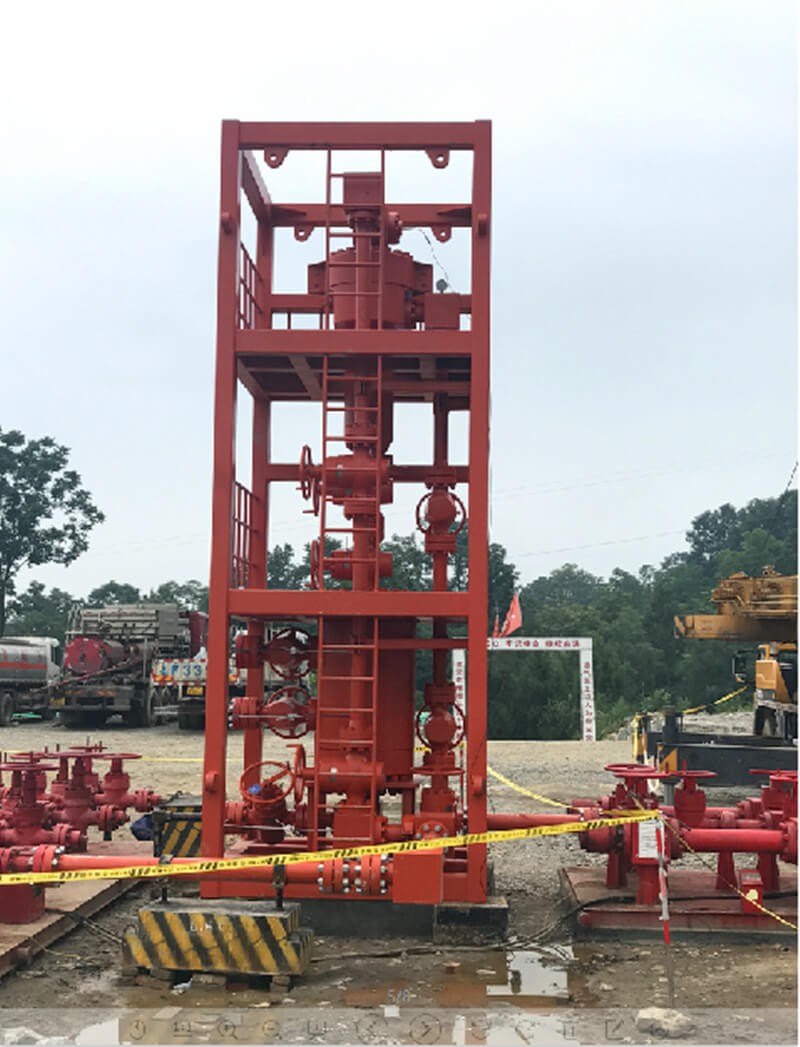
A Desander is a sand removal device that uses centrifugal force to separate fine solid particles from produced fluids.
During operation, the fluid enters the desander tangentially and creates a high-speed rotating flow. Due to the difference in density between solids and fluids, sand particles are forced toward the vessel wall and move downward into the collection chamber, while cleaner fluid exits through the outlet.
Compared with a Sand Trap, a Desander is more effective at removing smaller sand particles and is widely used in applications where equipment protection is critical, including:
High-pressure gas wells
Well testing packages
Applications with strict erosion control requirements
The main advantages of a Desander include:
Higher separation efficiency for fine particles
Compact design
Better protection for downstream equipment
Suitable for high-pressure applications
Key Differences Between Sand Trap and Desander
Although both types of equipment are used for sand removal, their working principles and application conditions are different.
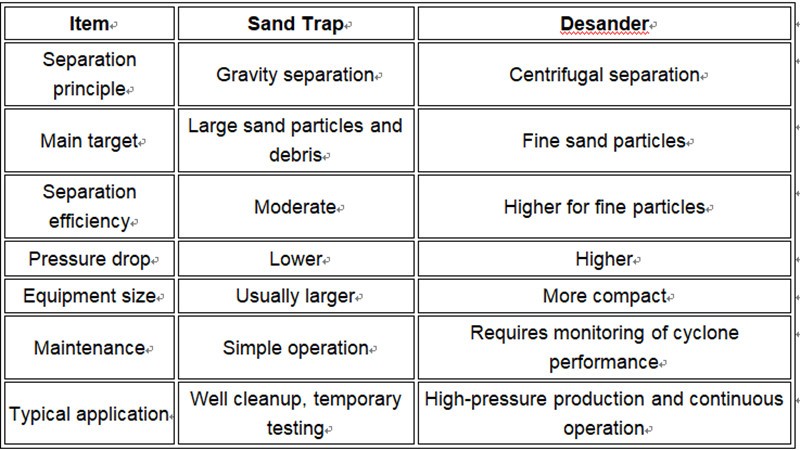
In simple terms, a Sand Trap is mainly used to capture larger solids, while a Desander is designed to remove finer sand particles and provide better protection for downstream equipment.
Can a Sand Trap and Desander Replace Each Other?
The answer depends on the operating conditions.In some low-sand applications, a Sand Trap may be sufficient. It can effectively remove large particles and protect downstream equipment.
However, for wells with high pressure, high flow rate, or fine sand production, a Desander is usually a better choice because fine particles can still pass through a gravity-based separator and cause erosion problems.
In some challenging applications, operators may even use both systems together:
Sand Trap → Desander → Test Separator
The Sand Trap removes larger solids first, while the Desander provides further separation of fine sand before the fluid enters downstream equipment.
How to Choose the Right Sand Removal Equipment?
Selecting between a Sand Trap and a Desander requires consideration of several factors:
1.Sand Production Characteristics
The size and amount of sand produced from the well directly affect equipment selection.
Large amounts of coarse sand may require a Sand Trap.
Fine sand production may require a Desander.
2.Operating Pressure and Flow Rate
High-pressure wells and gas wells usually require equipment with higher separation efficiency and erosion resistance.
3.Downstream Equipment Protection
If the produced fluid will enter sensitive equipment such as valves, meters, or separators, effective sand removal becomes more important.
4.Well Testing Requirements
During well testing operations, sand removal equipment must match the test duration, expected production rate, and fluid characteristics.
Sand Trap and Desander are not competing technologies. They are designed for different purposes and operating conditions.
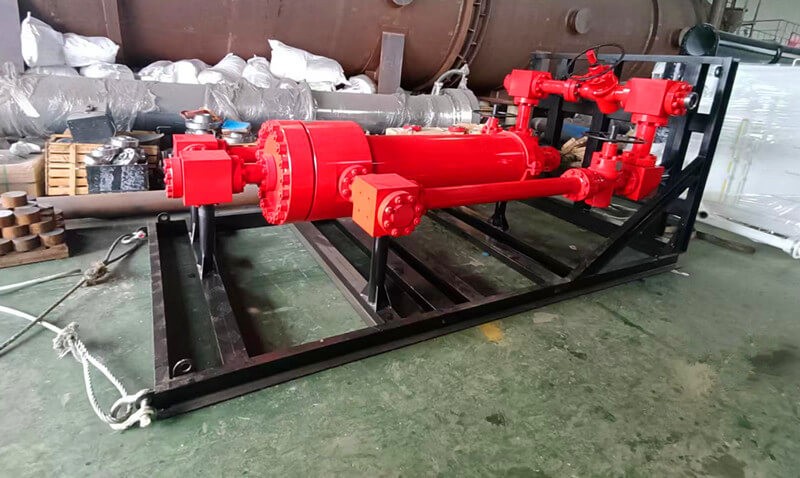
A Sand Trap provides a simple and reliable method for removing larger solids, while a Desander offers more efficient separation of fine sand particles, especially in high-pressure and demanding oilfield environments.
Choosing the right sand removal equipment requires a clear understanding of well conditions, production characteristics, and downstream protection requirements.
At HC, we design and manufacture customized oilfield equipment, including desanders, separators, and well testing packages, based on specific field requirements to help operators achieve safer and more reliable production operations.