





When the process requires the initial separation of gas and liquid, a Two-Phase Gas-Liquid Separator is one of the commonly used core pieces of equipment.
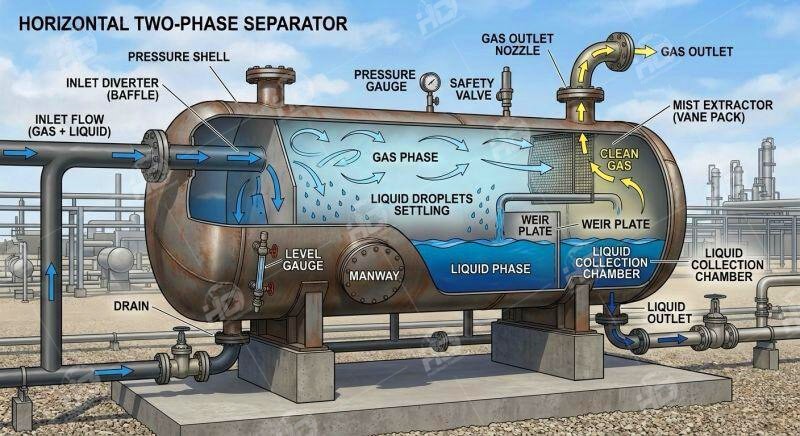
The main function of a two-phase gas-liquid separator is to utilize the differences in density, inertia and flow velocity between gas and liquid. After the mixed fluid enters the equipment, its flow velocity is reduced and its flow direction is changed, allowing gas-liquid separation to be achieved through gravity settling and other physical separation mechanisms.
Unlike a three-phase separator, a two-phase gas-liquid separator is mainly designed for the separation of the gas phase and liquid phase. After entering the equipment, the mixed fluid undergoes processes such as flow deceleration, impingement, gravity settling and demisting. The gas is discharged from the upper part of the equipment, while the liquid accumulates at the bottom under the action of gravity and is then discharged.
Its basic process can be simply understood as:
Mixed fluid inlet → Flow velocity reduction → Gas-liquid separation → Gas demisting → Gas outlet
At the same time:
Liquid droplet settling → Liquid accumulation → Level control → Liquid outlet
Therefore, the core function of a two-phase gas-liquid separator is not "filtration", but to achieve gas-liquid separation through physical separation principles.
How Does a Two-Phase Gas-Liquid Separator Work?
The working process of a two-phase gas-liquid separator can generally be divided into several main stages.
1.Mixed Fluid Enters the Separator
The gas-liquid mixture from the wellhead, pipeline or upstream equipment enters the separator through the inlet pipeline.
Since the fluid usually has a relatively high flow velocity at the inlet, and the gas and liquid are mixed together, they cannot be directly discharged through the outlets. After entering the separator, the fluid first needs to be decelerated and its flow direction adjusted.
2.Inlet Device Reduces Flow Velocity and Changes Flow Direction
After entering the equipment, the gas-liquid mixture passes through an inlet device, such as an inlet deflector, inlet diverter or other type of inlet distribution device.
When the high-velocity mixed fluid is blocked or redirected at the inlet, its kinetic energy is reduced. Larger liquid droplets collide with the inlet device under the effect of inertia and begin to separate from the gas stream.
Simply put, the purpose is to slow down the high-velocity mixed fluid while allowing the gas and liquid phases to separate as much as possible.
The inlet device can not only improve the internal flow pattern of the separator, but also reduce the direct impact of liquid on the internal components of the equipment.
3.Gas-Liquid Separation by Gravity
After passing through the inlet section, the mixed fluid enters a relatively stable space inside the separator.
Since the density of the liquid is much higher than that of the gas, larger liquid droplets settle downward under the action of gravity after the flow velocity is reduced, eventually accumulating at the bottom of the equipment.
At the same time, the lower-density gas moves toward the upper part of the equipment. This is the most basic separation mechanism of a two-phase gas-liquid separator:
The liquid settles downward, while the gas moves upward.
Therefore, the diameter and length of the separator vessel, as well as the effective internal separation space, need to be properly designed according to the flow rate, operating pressure, temperature and gas-liquid properties.
4.Demister Further Removes Liquid Droplets from the Gas
After gravity separation, the gas may still carry a small amount of fine liquid droplets.
To reduce the liquid carryover at the gas outlet, many two-phase gas-liquid separators are equipped with a demister before the gas outlet.
The demister can further capture fine liquid droplets carried by the gas stream. These droplets coalesce and then fall back into the liquid phase under the action of gravity.
Therefore, the separation process inside the separator can generally be described as follows:
Large liquid droplets → Separated in the inlet section
Medium-sized liquid droplets → Gravity settling
Fine liquid droplets → Captured by the demister
After these processes, the gas is discharged through the gas outlet at the top or upper side of the equipment.
5.Liquid Accumulates at the Bottom and Is Discharged
The separated liquid gradually accumulates at the bottom of the separator.
The equipment is usually equipped with a level gauge, level transmitter and level control valve to monitor and control the liquid level.
When the liquid level reaches the preset range, the control system adjusts the liquid outlet valve to discharge the separated liquid to downstream equipment or pipelines.
This can prevent the liquid level from becoming too high and causing liquid to enter the gas outlet, while also preventing the liquid level from becoming too low and affecting the normal operation of the equipment.
Main Components of a Two-Phase Gas-Liquid Separator
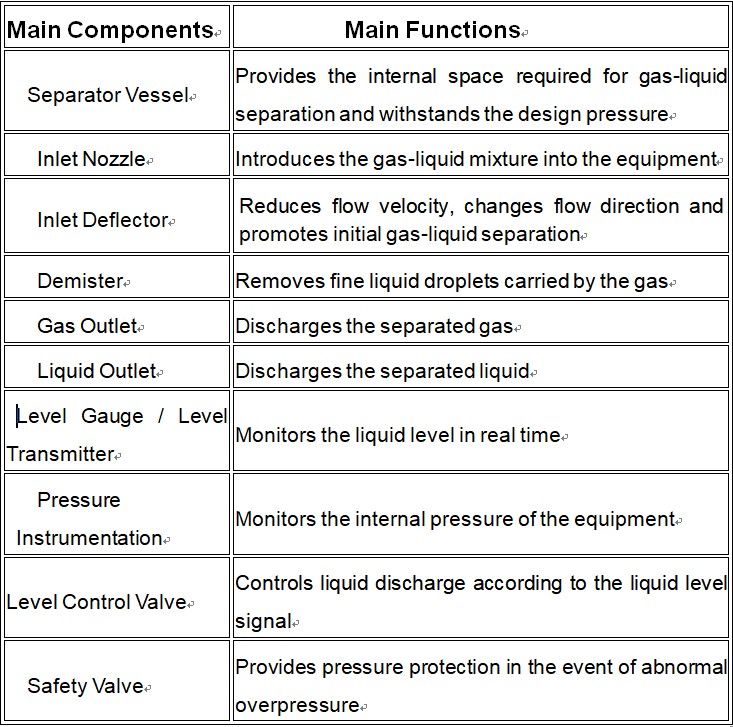
Although the equipment structure may vary according to the process requirements of different projects, a typical two-phase gas-liquid separator generally includes the following main componentrs:
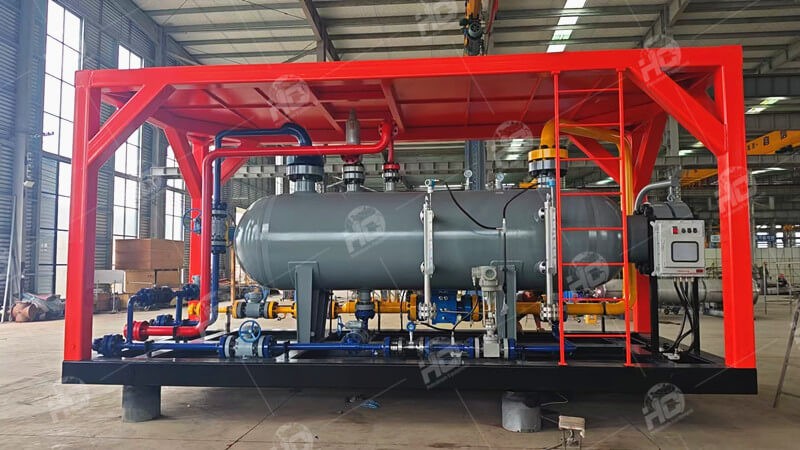
For skid-mounted two-phase gas-liquid separation equipment, valves, pressure gauges, level instruments, control cabinets, piping and support structures can also be integrated according to project requirements, allowing the equipment to be delivered as a complete skid-mounted unit.
-
2026 / 08 / 13
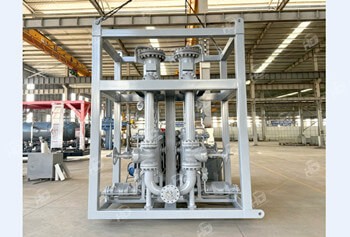 Dual Pot Sand Filter Designed and Manufactured for an Oman Oil & Gas Project
 -
2026 / 08 / 07
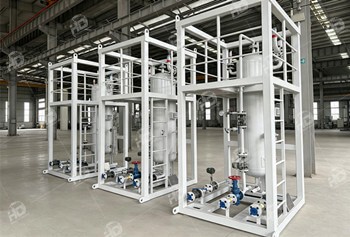 Three Vertical Three-Phase Separators Completed for Oil & Gas Project by HC Petroleum
 -
2026 / 07 / 24
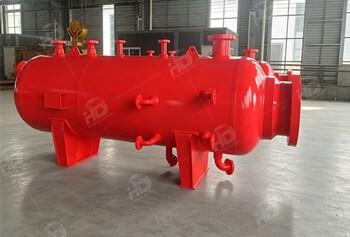 Two 1440 PSI Three-Phase Separators Completed for Nigeria Oil & Gas Project
- +86 158 6190 3617
