





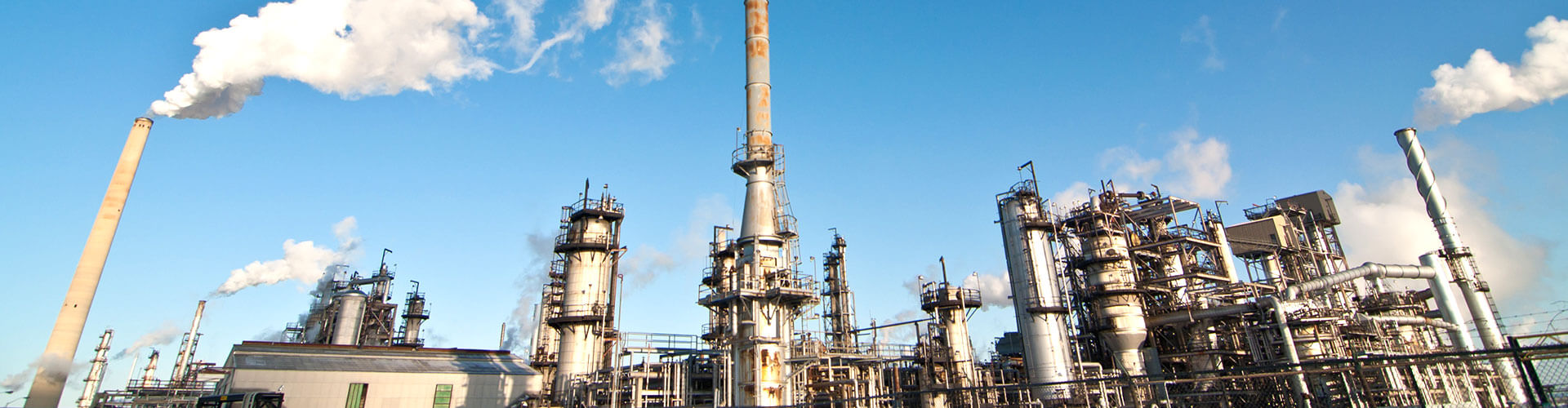
Many people’s understanding of oil production may simply be: there is oil underground, it is extracted through oil wells, and then sent to a refinery.
But in reality, the “oil” that comes out of the reservoir is not simply the crude oil we usually imagine. Therefore, after crude oil is extracted from underground, it still needs to go through a series of treatment processes before it becomes a suitable feedstock for storage, transportation, and further processing.
Simply put, the process can be understood as: extracted from underground → separated and treated at the surface → stored and transported after meeting the required conditions.
Oil is stored in underground reservoir rocks. When the reservoir pressure is sufficient, crude oil can enter the wellbore and flow toward the surface under the pressure of the formation. If the natural pressure is insufficient, artificial lift methods such as pumping units and gas lift are needed to bring the underground fluids to the surface.
But what comes out at this stage is not “pure crude oil.” Along with the crude oil, there is usually natural gas and formation water, and some oilfields may also produce a certain amount of sand and solid particles.
Therefore, the actual production treatment process begins after the fluids reach the wellhead.
The fluids coming from the well first reach the wellhead, where wellhead equipment is used to control the high-pressure fluids and safely transport them to the downstream production facilities.
This step may seem simple, but it is actually very important. Each piece of downstream production equipment has its own design pressure, temperature, and processing capacity, so the fluids entering the equipment must be within the appropriate operating range.
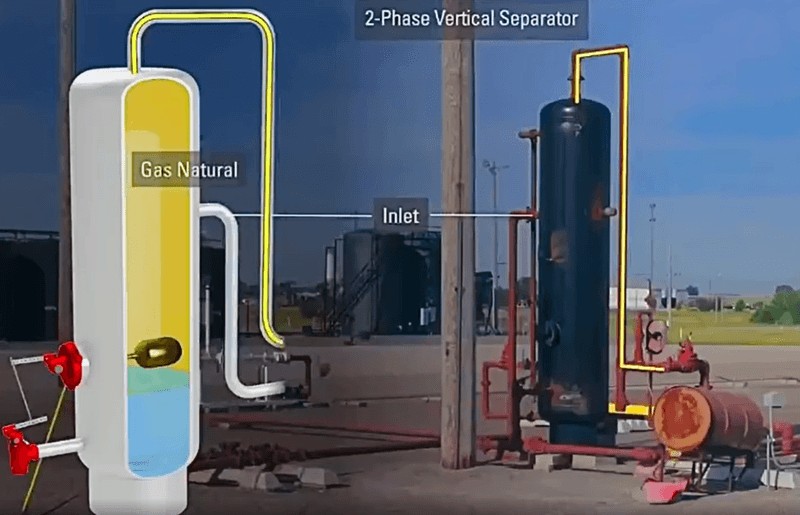
Once the fluids enter the surface production facilities, one of the most important steps is separation. Because natural gas, crude oil, and water have different densities, they can gradually separate under suitable pressure, temperature, and residence time.
For example, during gas-liquid two-phase separation, the less dense natural gas gathers in the upper part, while the liquid settles toward the bottom. If further separation of crude oil and water is required, additional oil-water separation is needed.
This is why gas-liquid two-phase separators or oil-gas-water three-phase separators are commonly seen in oil and gas production facilities.
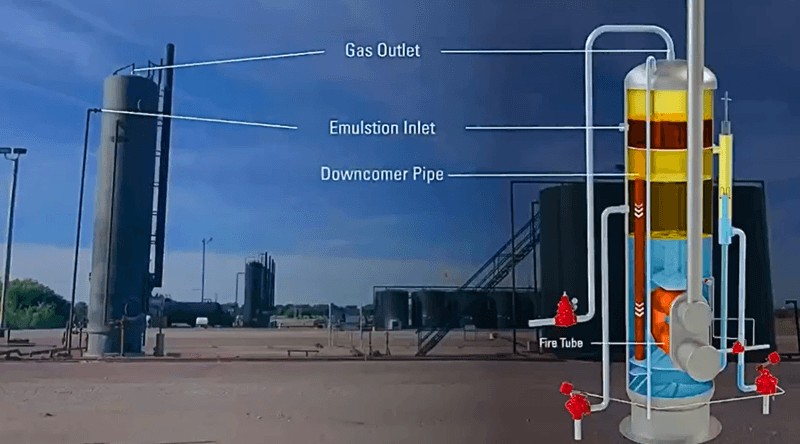
They may look like nothing more than large pressure vessels, but they actually perform a critical step in the entire production process: gradually separating the mixed fluids brought up from underground into different gas and liquid streams.
After the initial separation, the crude oil usually cannot be transported directly. It may still contain a certain amount of water, and there may also be relatively stable oil-water emulsions. Further treatment is therefore required.
In some oil and gas field gathering systems, water bath heaters are used to heat the oil and gas mixture or crude oil, reducing its viscosity and helping break oil-water emulsions. This allows water droplets to coalesce and settle more easily, further reducing the water content of the crude oil.
The specific treatment method depends on factors such as the properties of the crude oil, water content, and final product requirements.
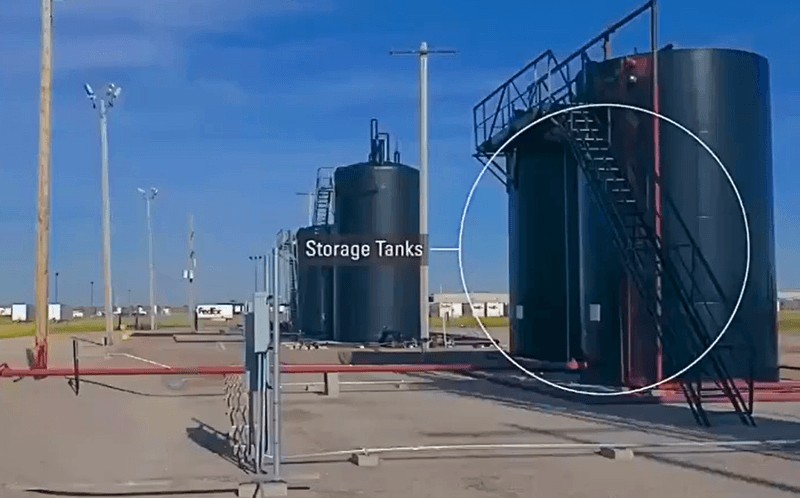
After separation and treatment, the crude oil needs to meet the relevant quality and operating requirements before entering the next stage. It is then usually transferred to storage tanks for temporary storage and transported to the next destination by pipeline, tanker truck, or other means of transportation.
For many oilfields, that “next destination” is a refinery.
Once it reaches the refinery, the crude oil enters the refining process that we are more familiar with, where it is processed into gasoline, diesel, jet fuel, and various petrochemical products.
So, if we connect the entire process in a simple way, it can be understood as:
Underground reservoir → Mixed fluids → Wellhead → Surface separation → Crude oil treatment → Storage → Transportation → Refinery
Of course, production conditions vary greatly from one oilfield to another, so not every oilfield uses exactly the same process. Some oilfields produce large amounts of gas, some have high water content, and others may face serious sand production problems. Therefore, the configuration of surface production facilities can also vary.
But regardless of how the equipment is configured at a particular site, the core objective is actually very clear: to gradually separate and treat the complex mixture of fluids coming from underground and ultimately turn it into crude oil, natural gas, and water that can be safely stored, transported, and further processed.
Therefore, what we see at an oil and gas production site is not simply a matter of “pumping oil out of the ground.” From the underground reservoir to the final delivery to a refinery, there is a complete production and treatment process in between.
-
2026 / 08 / 13
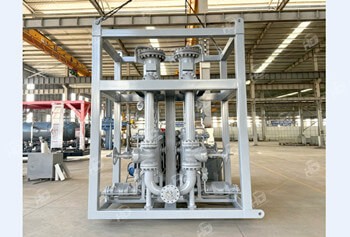 Dual Pot Sand Filter Designed and Manufactured for an Oman Oil & Gas Project
 -
2026 / 08 / 07
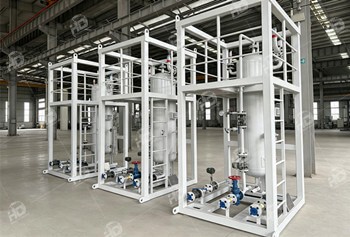 Three Vertical Three-Phase Separators Completed for Oil & Gas Project by HC Petroleum
 -
2026 / 07 / 24
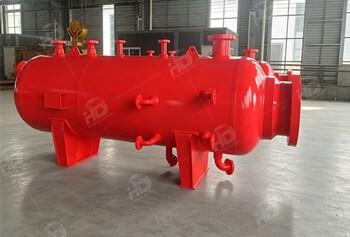 Two 1440 PSI Three-Phase Separators Completed for Nigeria Oil & Gas Project
- +86 158 6190 3617
