






Selecting a three phase separator for oilfield service is rarely a straightforward sizing exercise. While design calculations provide a necessary starting point, many operational issues arise not from incorrect flowrate assumptions, but from how production conditions evolve after startup.
In actual field operations, production behavior is often far less stable than expected. Gas rate fluctuates, water cut increases earlier than forecast, and solids may appear once the well begins to clean up. These changes frequently explain why a separator that appears adequate during engineering review struggles to perform reliably in service.
Understanding production behavior before equipment selection
Before determining separator configuration, engineers typically focus on understanding how the well is likely to behave over time rather than relying solely on initial production data.
Early production and well testing operations are especially sensitive to variation. Water cut may increase rapidly, gas–liquid ratio can shift daily, and short-term surges are common. When such behavior is not fully considered during selection, interface instability and repeated field adjustments often follow.
Experience shows that separators designed only for steady-state conditions rarely perform well during the early life of a field.
When three phase separation becomes necessary
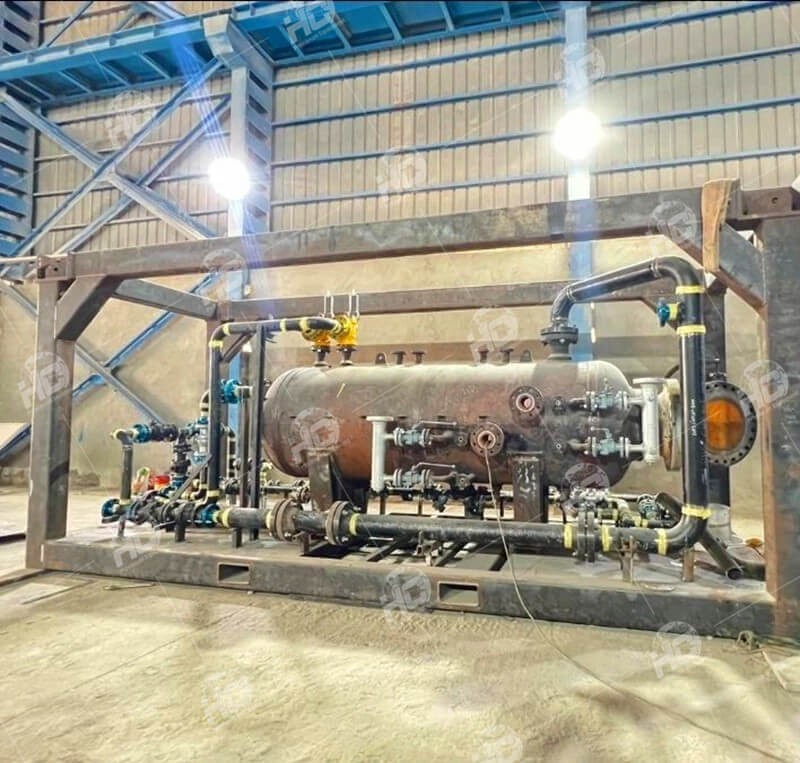
Two phase separation can be sufficient when water production remains low and predictable. However, once water cut begins to rise or fluctuate, independent oil–water control becomes essential.
For this reason, three phase separators are widely applied in early production facilities, extended well testing operations, and marginal oilfields where reservoir behavior is uncertain. In these applications, the objective is not only phase separation, but also operational flexibility — allowing the system to tolerate variation without continuous operator intervention.
Choosing between horizontal and vertical separators
There is no universal rule for selecting horizontal or vertical three phase separators. The decision is typically driven by field conditions rather than theoretical separation efficiency.
Horizontal separators are commonly preferred when liquid handling capacity is high and sufficient oil–water residence time is required. Their wider interface control range provides greater tolerance when water cut changes during operation.
Vertical separators, by contrast, are often suitable for gas-dominated production or installations where plot space is limited. However, interface stability may become more sensitive under fluctuating liquid loads, which can increase operational attention during early production stages.
In many EPF projects, horizontal separators are selected primarily for their operational flexibility rather than compactness.
Factors that usually influence separation performance
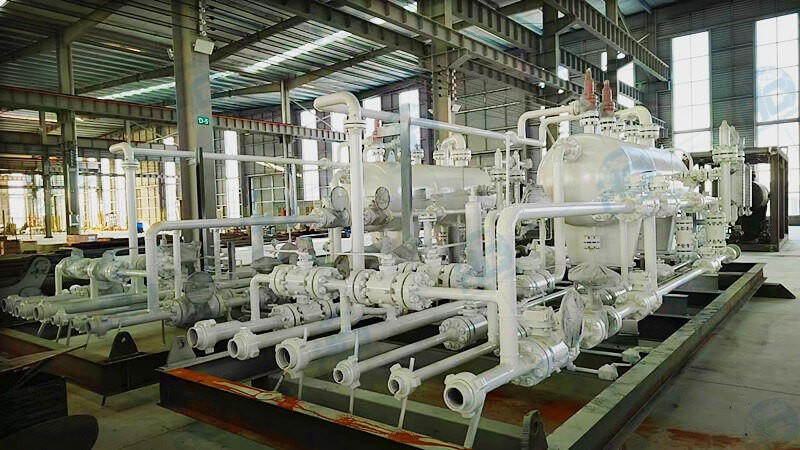
Although gravity separation forms the basic working principle, real performance is strongly influenced by how fluid behaves inside the vessel.
In practice, many separation problems originate from excessive inlet momentum, uneven internal flow distribution, or insufficient liquid retention time. Even when calculations meet design criteria, oil carryover may still occur if the inlet device fails to properly calm the incoming flow.
For this reason, internal configuration often has a greater impact on performance than shell diameter alone. Small differences in inlet design or flow distribution can significantly affect long-term separation stability.
The often underestimated impact of sand
Sand is frequently treated as a secondary concern during early engineering discussions. Its influence, however, becomes much more apparent once the system enters operation.
Even moderate sand production can gradually cause internal erosion, interfere with instruments, and reduce the effective separation volume. Over time, these effects may lead to declining performance and increased maintenance requirements.
For oilfields where sand production is expected, installing a cyclone desander upstream of the separator is generally considered a more reliable solution. Removing solids before they enter the vessel helps protect internals and maintain stable operation over the life of the facility.
Control philosophy and operational stability
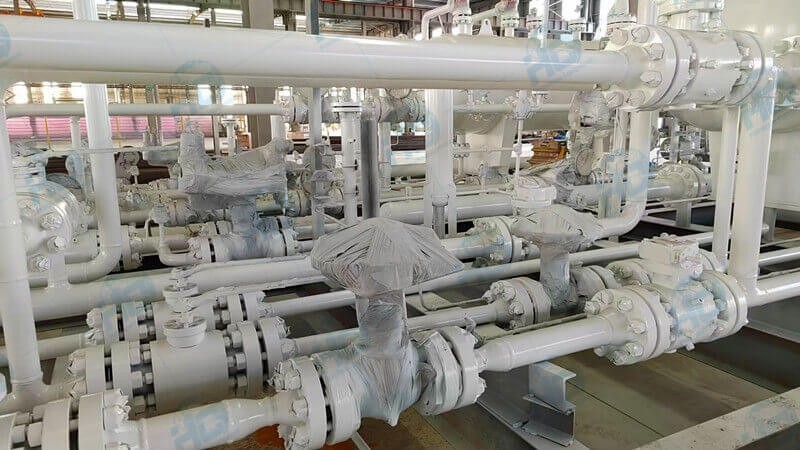
Stable three phase separation relies heavily on proper level and interface control. In field operation, the overall control philosophy is often more important than the specific instrumentation brand.
Systems designed with narrow control margins may respond poorly to production fluctuation, resulting in frequent alarms or manual adjustment. A simpler and more tolerant control approach usually provides better stability, particularly during early production and well testing operations where conditions change continuously.
Importance of early engineering involvement
Separator selection is most effective when addressed during the early stage of process design rather than after layout and equipment lists have been finalized.
Manufacturers with in-house process engineering capability, such as HC Petroleum, are often involved at this stage to review production assumptions, evaluate separator configuration, and ensure the selected design can accommodate real operating variation rather than idealized design conditions.
Early engineering involvement significantly reduces the risk of modification or performance issues after installation.
A three phase separator is not a standard catalogue item. Its performance depends largely on how well the design reflects the actual behavior of the well throughout its production life.
By focusing on production variability, internal configuration, sand handling, and control philosophy, operators can greatly improve separation stability and reduce long-term operational risk.
Proper selection is therefore not simply a matter of vessel size, but a process decision that supports safe and reliable oilfield production.
-
2026 / 08 / 13
 Dual Pot Sand Filter Designed and Manufactured for an Oman Oil & Gas Project
 -
2026 / 08 / 07
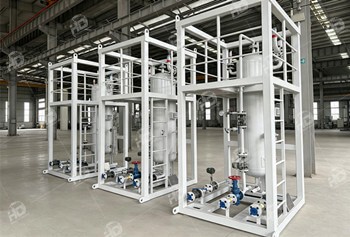 Three Vertical Three-Phase Separators Completed for Oil & Gas Project by HC Petroleum
 -
2026 / 07 / 24
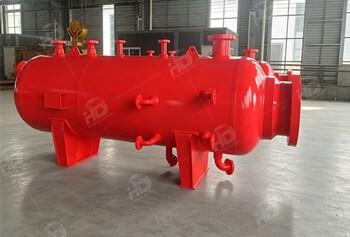 Two 1440 PSI Three-Phase Separators Completed for Nigeria Oil & Gas Project
- +86 158 6190 3617
